Every open world promises a living city and most deliver a very pretty diorama. NTE: Neverness to Everness is the rare one that actually feels inhabited. Within an hour of arriving in Hethereau I'd watched an Esper snap his fingers to steam-clean his suit on the train platform, been shoulder-barged by a chaotic street chase, and stopped to eavesdrop on a silver-gloved butler gossiping with a second-hand electronics dealer. None of it was a quest. It was just Tuesday in Hotta Studio's supernatural metropolis.
That texture is the whole pitch. Hotta have said it plainly: the warm reception to Mirroria — the neon cyberpunk hub in their last game, Tower of Fantasy — convinced them to build an entire game out of that feeling. NTE is the result, an Unreal Engine 5 urban RPG that launched worldwide on 29 April 2026 and lands on Steam on 7 July. Based on the current live build, player reports and official materials, it's one of the most convincing "city as playground" pitches the genre has produced in a while.
A city, not a map
You arrive as Hethereau's first unlicensed Anomaly Hunter and fall in with the crew at Eibon, a rundown antique shop that keeps the lights on by taking Anomaly commissions from anyone with cash. It's a brilliant framing device: the shop is your excuse to poke your nose into every weird corner of the city, and the city obliges. Rumours swirl about a pawnshop that only appears on the full moon. A lovestruck otter named Taygedo is running out of time to confess to Miss Tako before she leaves town. The Anomaly Rainman is "entering an active phase," so bring an umbrella.
Hotta didn't build a map and drop a city onto it. They built a city, and let the map happen. On Hethereau
The daily-life writing is genuinely funny and specific — TV-headed repairmen with strange eating habits, "jack-of-all-trades" robot butlers, absurdly overpowered bodyguards moonlighting in back-alley shops. It's the anti-checklist open world: the reward for wandering isn't a tower to climb, it's a story you weren't looking for.
Four heroes, one fight
Combat is a third-person action system built around swapping between a party of four. Each companion is an Esper with a distinct kit — the game calls them Esper Abilities — and the fun is in the hand-off: cancel one character's heavy into another's opener, stack a debuff, then swap to the payoff. It's the "tag-team action" lineage of Zenless Zone Zero and Wuthering Waves, but NTE hangs a smart wrinkle on it.
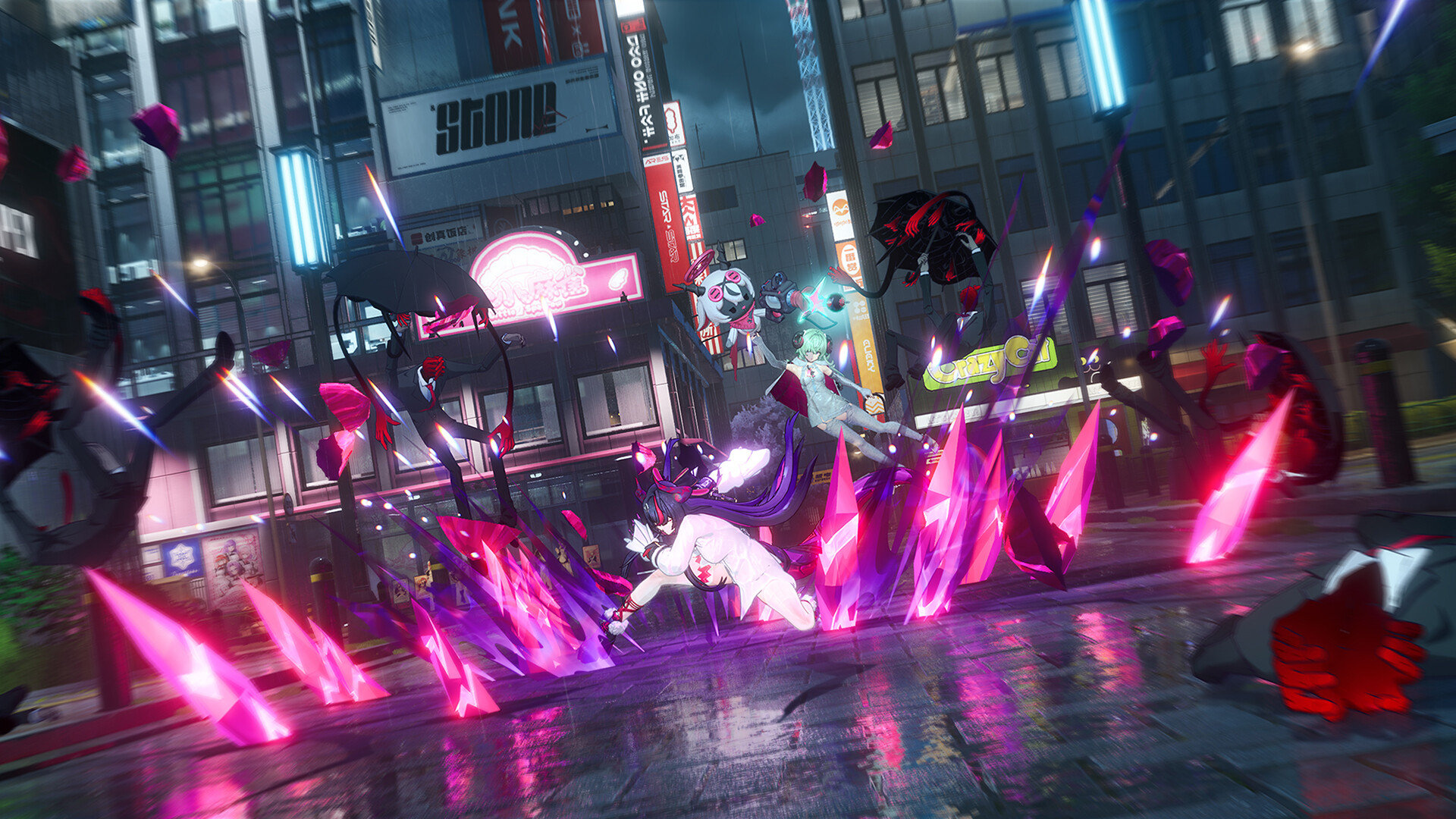
That wrinkle is the Esper Cycle — six elements (Lakshana, Cosmos, Anima, Incantation, Chaos, Psyche) arranged on a wheel — rather than the usual fire/ice/lightning triangle. Reactions only fire between neighbours on the wheel, so a team isn't just "two DPS and a healer"; it's a little chemistry set. Get the reaction order right and a fight folds in seconds. Get greedy and you'll respect the dodge timing very quickly.
The part nobody expected: the life sim
Under the action game is a surprisingly deep slice-of-life layer. You can customise a car and tear through the streets, or skip the drive entirely and fast-travel between discovered phone booths and district towers. There are mini-games — diving, racing — and a proper housing system: buy a little apartment through the Anomaly Property system and deck it out. The social system is charmingly named: you add people from different factions as "Bagel" friends and unlock side-stories by deepening those bonds.
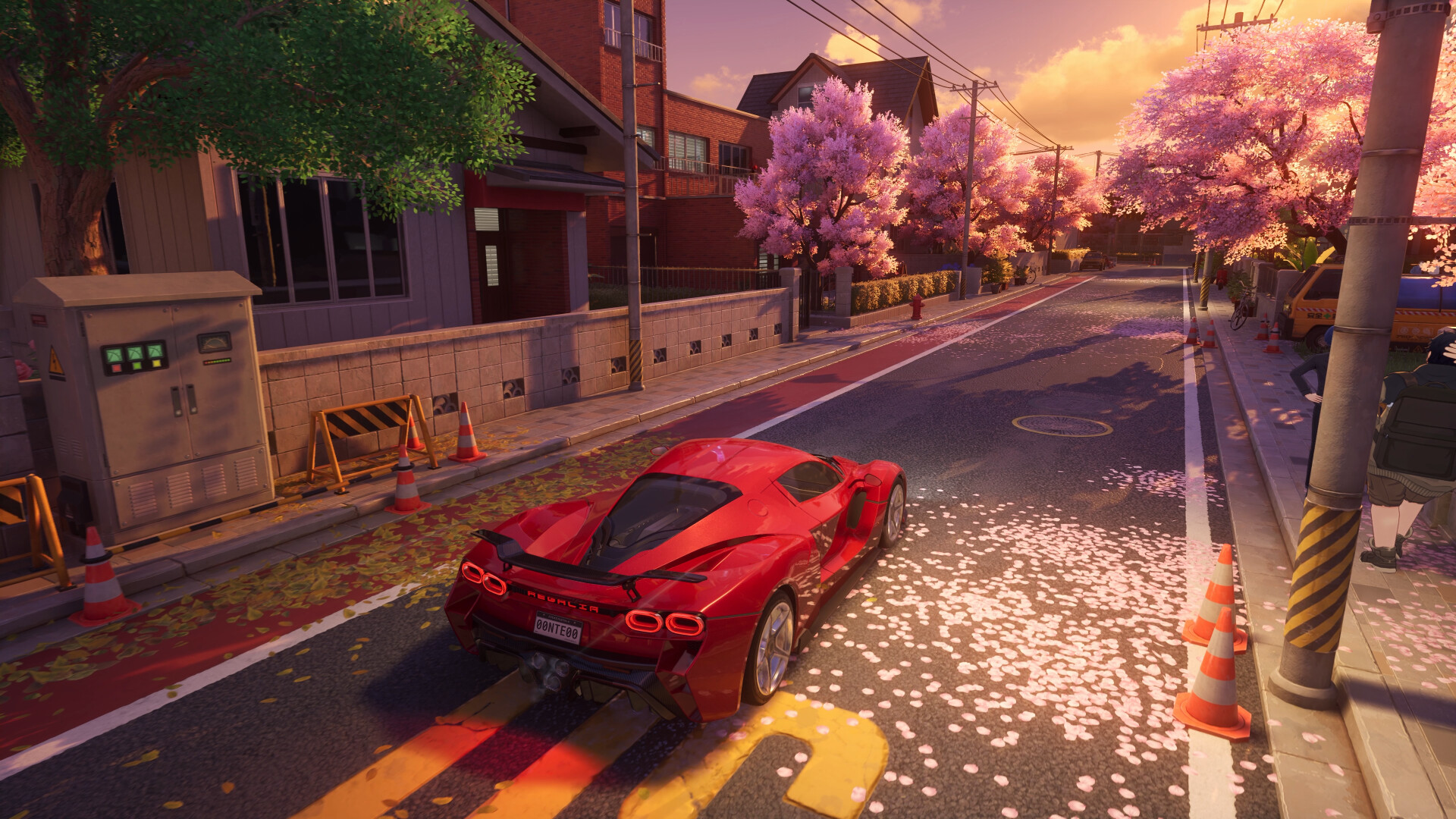
It gives Hethereau a second gear. When you're not chasing the looming plot — the shadowy "Circle" organisation, the unbreakable "Oaths," the fragmentary "Prophecies" — you can just live in the city at your own pace. That balance of grand supernatural mystery and cosy urban downtime is NTE's most distinctive trick.
The gacha question — and the caveats
Here's the asterisk. NTE is free-to-play and gacha-supported, and it's cross-platform — PC, PS5, iOS and Android, with a Switch 2 version under evaluation. That reach is impressive, but it leaves open questions a preview can't settle. The game has also drawn discussion around its use of generative AI, and, like any gacha live-service, its long-term value hinges on how the economy evolves. The long-term verdict depends on monetisation, update cadence, performance stability and how Hotta handles post-launch feedback. The hefty install and always-online requirement are the cost of entry.
What can be said is that the base experience asks for nothing but your time, and gives back a city worth trying. If the monetisation stays reasonable, this is an easy recommendation. Either way, when it hits Steam on 7 July, it will be one of the summer's most-watched launches.