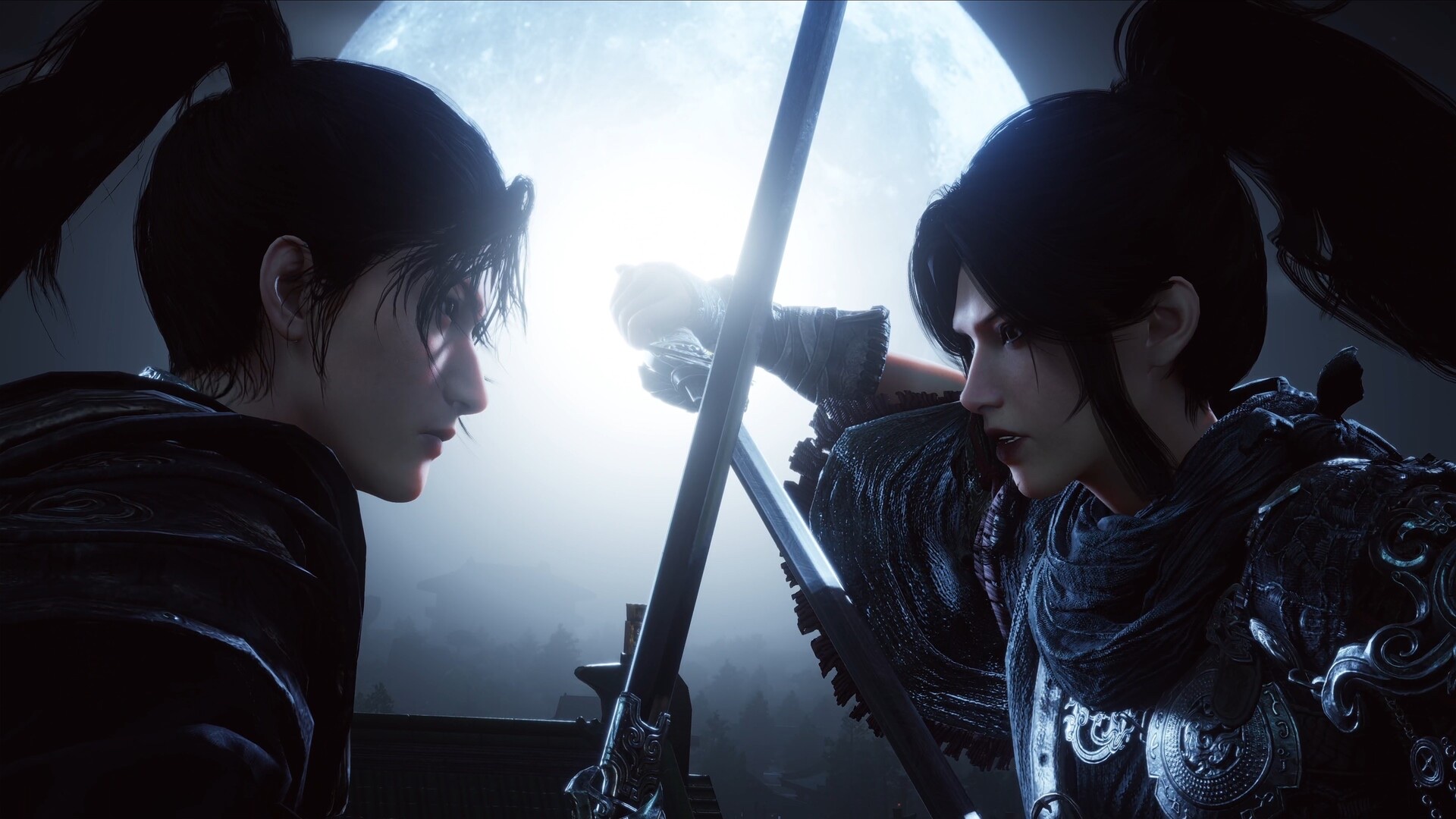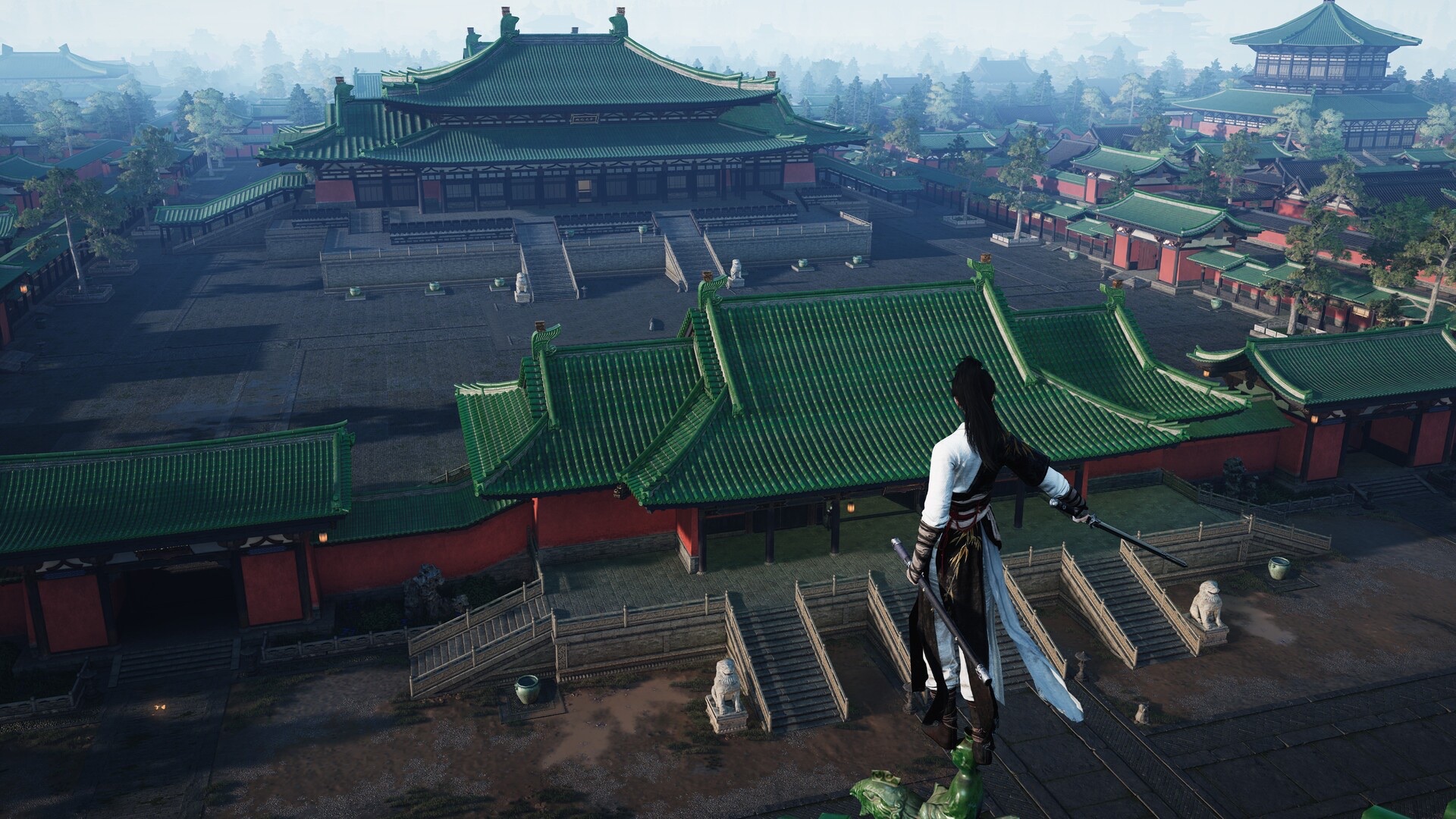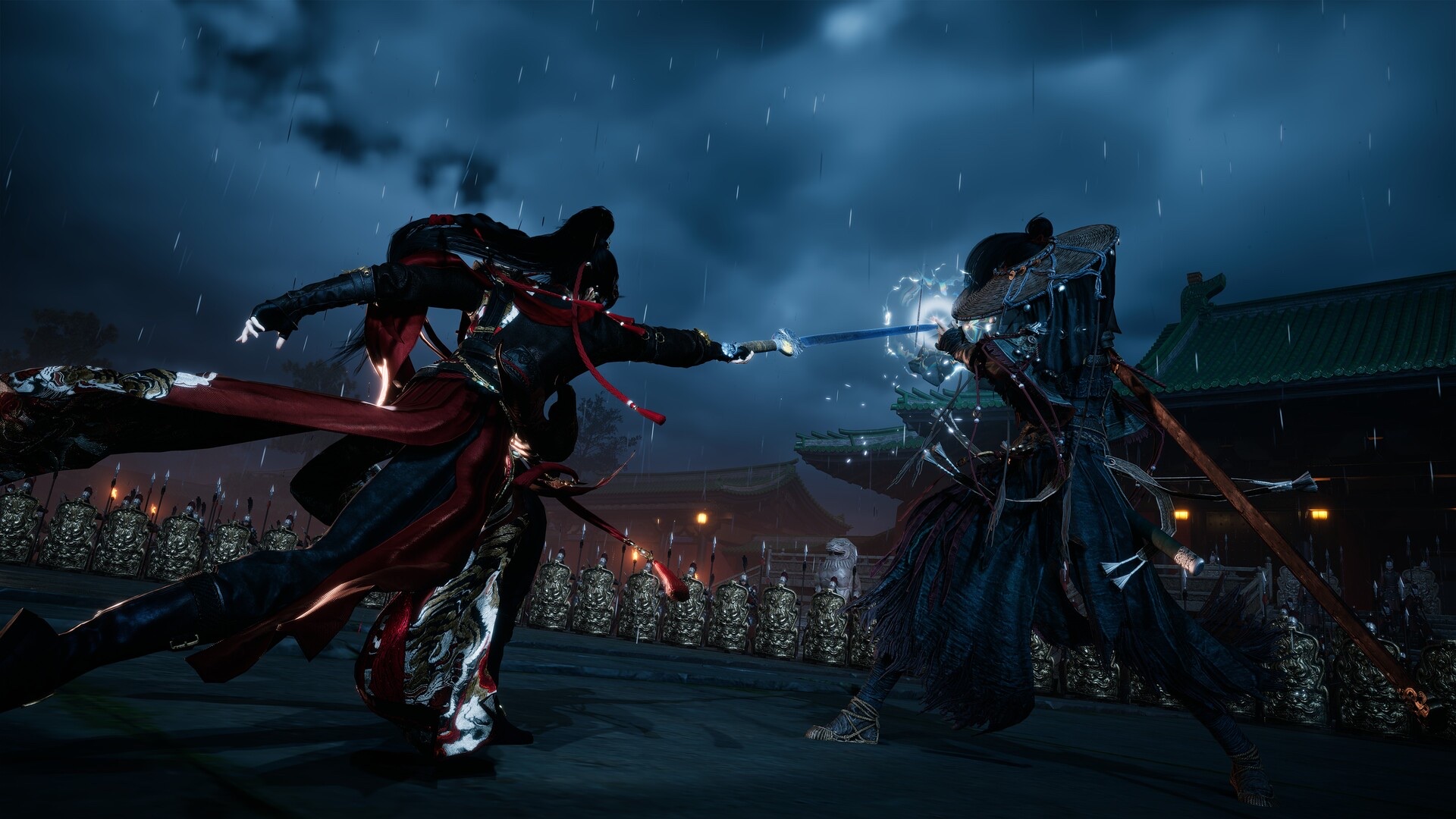
This is the closest sibling on the list — literally, since both are NetEase games and share visible DNA in their animations, weapon feel and even some UI. Both are built on wire-fu, kung-fu-movie combat: fast, aerial, parry-heavy melee mixed with ranged options. But they're built for completely different sessions. Naraka: Bladepoint is a competitive battle-royale; Where Winds Meet is a story-driven open-world RPG that happens to include PvP.
Combat feel
On paper the systems rhyme — grappling-hook mobility, parries that clash mid-air, melee weapons paired with bows and firearms. In the hand they feel different. Naraka is tuned for unpredictable, high-adrenaline duels against other humans, where every fight is a fresh read on a real opponent. Where Winds Meet generally moves at the player's pace: its parry-and-posture combat (closer to Sekiro) is deployed against designed encounters and bosses, with 40-plus Martial Mystic Arts and a deep weapon roster to build around. Same cinematic language, very different rhythm.
Structure & mode
- Naraka: Bladepoint — a dedicated battle-royale (up to 60 players) with hero characters, ranked ladders and a PvP-first economy. The whole game is the arena.
- Where Winds Meet — a full open-world wuxia RPG: 150-plus hours of story, 20-plus regions, non-combat identities (Craftsman, Musician, Doctor), plus optional co-op, guilds, dungeons and PvP duels via its Shared Journey mode. It also offers battle-royale-style PvP modes, but they're one activity among many rather than the point of the game.
Monetisation
Both are free-to-play and lean on cosmetics rather than power. Naraka sells character skins and weapon appearances around its competitive core. Where Winds Meet is explicitly no-pay-to-win too, but its premium cosmetic gacha has drawn heavier criticism, with community estimates of $1,000-plus to chase specific outfits or weapon tints — worth knowing if you're cosmetics-motivated.
Which should you play?
- Pick Naraka: Bladepoint if you want tense, skill-tested PvP where the thrill is outplaying real people, match after match.
- Pick Where Winds Meet if you want that same wuxia combat flavour wrapped in a rich single-player world, with multiplayer and PvP as options rather than the whole experience.
If PvP dueling is specifically what draws you, temper expectations: Naraka is a mature, dedicated competitive game with years of balancing behind it, whereas Where Winds Meet's PvP is newer, secondary to its RPG focus, and still finding its footing globally.